
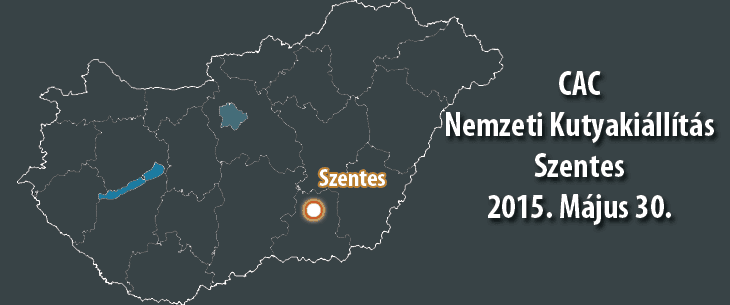
A tavasz legszebb hónapjának záró kiállítása a szentesi CAC Nemzeti Kiállítás, melyen a Szentesi Ebtenyésztők és Sportkutyások Egyesületének szervezésében vehetünk részt 2015. május 30.-án. A CAC kiállítás helyszíne Szentesen a Kurca-parton található Kalandpark területe.
A kiállítást rendező Egyesület története egészen az 1968-as esztendőig nyúlik vissza. Abban az évben jött létre Szentesi kutyás egylet néven, mely 1970-ben, miután a MEOE felvette tagegyesületi közé, nevet változtatott és a MEOE Szentesi Szervezete néven működött tovább. Ezzel együtt és egy időben megalakult a Szervezet kutyaiskolája is, mely akkoriban szocializációs neveléssel és kutyakiállításra felkészítő foglalkozásokkal várta a szocializálódni vágyó kutyákat és gazdáikat.
Az 1980-as évektől kezdődően a Szervezet virágkorát élte, kutyaiskolája egyre népszerűbbé vált és taglétszáma is folyamatosan növekedett, egészen az 1990-es évek végéig, onnantól kezdve viszont meredek csökkenés volt tapasztalható, mint a MEOE többi tagszervezeténél is. 2011 év elejére a Szervezet a mélypontra zuhant, melyből az új vezetőség megalakulása után baráti összefogással sikerült kilábalniuk.
A MEOE Szentesi Szervezete 2011 év végén jelentősen átalakult, jogutódja a Szentesi Ebtenyésztők és Sportkutyások Egyesülete lett. Az új Egyesület a régi Szervezet arculatát megtartva számos érdekes kutyás programmal színesíti a kutyás életet, továbbá a kutyaiskola működését továbbfejlesztve immár szakirányú kiképzőkkel magasabb szinten működteti azt, teret engedve a kutyával való sportolásnak és a sportkutyázásnak is. A jól működő kutyaiskola szocializációs, engedelmességi, őrző-védő valamint kiállításra felkészítő tréningekkel várja a tanulni vágyókat. A kutyaiskola céljai között szerepel a kulturált, felelősségteljes kutyázás elősegítése, valamint széles körben megismertetni a kutyával való sportolás lehetőségeit a sportkutyázáséval egyetemben. A kutyaiskola különböző tanfolyamai bármilyen nemű és korú, fajtatiszta vagy keverék kutyával látogathatók. A Szentesi Ebtenyésztők és Sportkutyások Egyesületének kutyaiskolája szeretettel vár minden tanulni és sportolni vágyót!
A 2015. évi CAC kutyakiállítás fontosabb információit a következőkben ismertetjük:
Információk kiállítóknak:
Bírói lista:
Vezető bíró: Dr. Jakkel Tamás | |
| FCI I. fajtacsoport | |
| Összes fajta | Radich Dusan (SRB) |
| FCI II. fajtacsoport | |
| Rottweiler, Hovawart, Tibeti Masztiff, Angol Bulldog, Shar-Pei, Schnauzerek | Radich Dusan (SRB) |
| Fel nem sorolt fajták | Orcsik István (SRB) |
| FCI III. fajtacsoport | |
| Összes fajta | Mirsad Miko Sabanovic (BIH) |
| FCI IV. fajtacsoport | |
| Összes fajta | Juhász Csilla (HU) |
| FCI V. fajtacsoport | |
| Összes fajta | Tarján Annamária (HU) |
| FCI VI. fajtacsoport | |
| Összes fajta | Dr. Jakkel Tamás (HU) |
| FCI VII. fajtacsoport | |
| Összes fajta | Dr. Jakkel Tamás (HU) |
| FCI VIII. fajtacsoport | |
| Összes fajta | Dr. Jakkel Tamás (HU) |
| FCI IX. fajtacsoport | |
| Összes fajta | Tarján Annamária (HU) |
| FCI X. fajtacsoport | |
| Összes fajta | Juhász Csilla (HU) |
Nevezési határidő: 2015. Április 30.
Nevezési díjak:
| CAC Kiállítás | Szövetségi tagkártyával rendelkezők részére | Szövetségi tagkártyával NEM rendelkezők részére |
|---|---|---|
| Első kutya | 4000 Ft | 8000 Ft |
| Második kutyától | 3500 Ft | 7000 Ft |
| Veterán, Minor Puppy, Kölyök | 2500 Ft | 5000 Ft |
| Átsorolás az utolsó nevezési határidőig | 2000 Ft/kutya | 4000 Ft/kutya |
| CAC kiállítás helyszínen nevezhető | ||
| Fiatal felvezetők | 2000 Ft | 4000 Ft |
| Kutyapár, Tenyészcsoport, Utódcsoport | 2000 Ft | 4000 Ft |
Az első kutya nevezési díja egy darab katalógus árát tartalmazza! A nevezési díjak a magyar kutyafajták esetében 50%-os kedvezménnyel számítanak.
Nevezést indíthatunk online erről a linkről>>.
Regisztráció, majd a személyes adatok illetve a nevezendő kutya/kutyák adatainak és dokumentum másolatainak (törzskönyv másolat első és második oldal, regisztrációs tagkártya másolata, Champion vagy Munkavizsga bizonyítvány, ha van illetve a befizetési csekk vagy banki átutalás másolata) felvitele után lehetséges az online nevezés indítása. A nevezés csak akkor lesz érvényes, hogyha a nevezés díja is rendezve van!

Postai nevezés esetén, a nevezési lap pontos kitöltése és aláírása után, csatolni kell a nevezni kívánt kutya törzskönyv másolatát, a nevezési díj igazolásához a befizetett csekk vagy átutalási bizonylat másolatát, Champion vagy Munka bizonyítványok másolatát (ha van) és a 2015. évi szövetségi tagkártya másolatát.
Banki átutalás esetén a Szentesi Ebtenyésztők és Sportkutyások Egyesületének bankszámlaszáma:
11735043 – 20035482
Nevezési díjat kizárólag a fenti bankszámlaszámra való utalással fogadnak el!
A megjegyzés rovatba minden esetben fel kell tüntetni a nevezési lapon szereplő e-mail címet, valamint a befizetett összeget – ez alapján fogják tudni beazonosítani a nevezett kutyát.
A nevezési díjat postai feladás esetén a következő címre kell befizetni:
Szentesi Ebtenyésztők és Sportkutyások Egyesülete
Szentes
Dózsa György u. 175.
6600
Nevezési cím postai feladás esetén:
Hód-Dog Kutyabarát Egyesület
H-6801 Hódmezővásárhely
Pf.1
Fax: +36 (62) 534-285
További információk a Szentesi Ebtenyésztők és Sportkutyások Egyesületének hivatalos weboldalán>>.
Illetve a SZESE hivatalos facebook oldalán találhatóak>>.
A kutyával való sportolási lehetőségekről is tájékozódhatunk a hivatalos weboldalon keresztül>>.
A CAC kiállítással kapcsolatos bővebb információ kérhető az alábbi email címen:
meoeszentes@gmail.com
Illetve az alábbi telefonszámon:
+36 30 694 6078.
„Szentesen láthatunk rengeteg zöldet, megújult gyönyörű épületeket, fiatalos lendületet, láthatunk vendégszerető embereket, a vendégszerető emberek mosolyát, és a legszebb mindig az, ha az emberek tudnak mosolyogni, hisz két ember között a legrövidebb út egy mosoly és Szentesen csak rövid utak vannak” – e kedves szavakkal invitál minden érdeklődőt a CAC kutyakiállítás városába, Szentesre a város Polgármestere.
Szentes a Dél-Alföldön, Csongrád megye északi részén, a Tiszától keletre fekszik. A várost a Kurca-folyó szeli ketté, mely Szentes szimbóluma is egyben. A város fekvése lehetõvé teszi a közúton, a vasúton, a vízi úton és a légi úton való megközelítést is.
Szentes történetéről több írásos emlék maradt fenn, a rendkívül gazdag régészeti leletekben tanúsága szerint a település már az új kőkor óta lakott volt. A honfoglalás idején többféle népcsoport fordult meg e településen, melyek egymással folyamatosan harcot vívtak. Ezen ádáz harcoknak a település többször is áldozatául esett, a kunok, a tatárok majd a törökök is lerombolták, de mindannyiszor újraéledt hamvaiból. A török kiűzése után kincstári birtok lett. 1730-ban városi és vásártartási jogot kapott. Ekkor jelent meg a város pecsétjén, majd később a címerén is a pálmafa-szimbólum, amely a szentesi nép szívós élni akarását és örökös megújulását fejezi ki. A város aranykora a XIX. századra tehető, mely a folytonos gyarapodás időszaka volt. Szentes Csongrád vármegye székhelye lett, ezáltal élénk iparosodás és gyors városiasodás indult meg. A két világháború között a gazdasági növekedés lelassult. 1945 után megindult a gazdaság újjáépítése, ám az ezt követő években a kultúra elszürkült. Az 1960-as években a város mezőgazdasági és ipari termékei keresettek lettek a keleti és a nyugati piacokon egyaránt. Az 1990-ben elkezdődött átalakulás a gazdasági élet átrendeződését indította el, de a település továbbra is alapvetően mezőgazdasági jellegű maradt.
Szentes a vizek és a múzeumok városa. Szentesen számtalan Múzeum található, melyek közül elsőként kell említenünk a Koszta József Múzeumot, amely 1897 óta működik és mára Csongrád megye második legnagyobb régészeti gyűjteményét őrzi. A Szentesi Városi Galéria az 1970-es években nyitotta meg kapuit a nagyközönség előtt, szentesi illetve Szentesről elszármazott művészek kiállításaival. A Galéria azóta is minden évben e művészek kiállításainak ad otthont, valamint néprajzi és számtalan más témájú kiállítása is látogatható. Az 1905-ben épült, majd 1997-ben felújított Fridrich-féle Fényirda az ország egyetlen vidéki fényirdája, melyben Fridrich János és lányai illetve más szentesi fotográfusok felvételei, műszerei, eszközei és szerszámai tekinthetők meg. Itt tárolják a szentesi múzeum helytörténeti gyűjteményének fotótárát is. Szentes egyik leglátogatottabb közművelődési intézménye, az egykori Zsinagóga épületében működő Városi Könyvtár, amely magas fokon biztosítja mind a gyermekek, mind a felnőttek részére az igényes művelődést.
Szentes további értékes látnivalói közül meg kell említenünk templomait, melyekből bőven van a városban. Elsőként említhetjük a barokk Szent Anna Katolikus Templomot, mely az 1760-as években épült. Jelenlegi klasszicizáló formáját 1847-ben nyerte el. A mai időkben hangversenyek állandó színhelyéül szolgál. A Református Nagytemplom az Alföld leghosszabb hajójú temploma, mely klasszicista és barokk stílusjegyeket hordoz magán. Az épület emeleti karzatán templomi galéria található. A Szent Miklós Magyar Ortodox Templom az 1700-as évek végén épült késő barokk stílusban, benne ikonosztázzal és falfestményekkel, külső falfülkéjében Szent Miklóst ábrázoló freskóval. Az Evangélikus Templom neogótikus stílusban épült az 1900-as évek legelején. Az épületen a gótikus stíluselemek egyértelműen észrevehetők.
A város egyik kuriózuma a geotermikus energia. Szentes vidéke Magyarország legnagyobb és Európa legsűrűbb geotermikus mezője, a város területén 32 termálkút szolgáltatja a 65 C°-nál melegebb vizet, így ezzel Európa második legnagyobb geotermikus fűtési rendszere működik a városban lassan már 20 éve, mely egy nagyon zöld és környezetbarát megoldás. A Termál Gyógyfürdő, a kórház, számos ipari és mezőgazdasági üzem is hasznosítja a termálvizet. Ez a termálvíz rengeteg zöldséget is ad az országnak és Európának, hiszen a szentesi paprika és paradicsom fogalom és hungarikumként is védett termék
Szentes virágzó, pezsgő kulturális és sportélettel teli település, ahol tisztelik és ápolják a hagyományokat, ám a fejlődésnek is hagynak teret. A város a Nemzet Sportvárosa címmel is büszkélkedhet. 1996-ban nyerte el e megtisztelő címet. A város polgárai sportkedvelők, jó néhány klub, egyesület működik itt. Hagyományosan az úszás és a vízilabda a kedvelt mozgásformák, a küzdősportok, a keleti harcművészetek népszerűsége viszont már újabb keletű.
A kultúra hatalmas szerepet játszik a város életében, szinte minden napra jut egy rendezvény. A helybéliek igyekeznek minél több programot kialakítani, mellyel növelhetik a város értékeit és melyekkel őrizhetik hagyományaikat. Irodalmi, komolyzenei, színházi, képzőművészeti estek egyaránt szerepelnek a palettán. Állandó rendezvényeik között megtalálhatók a hagyományos és rendhagyó események, valamint a sportfesztiválok is. Számos hagyományőrző rendezvényt – Télbúcsúztató Karnevál, Nyári Színház, Őszi Térfesztivál – is tartanak, melyek messzi földről is vonzzák a turistákat. A legnépszerűbb rendezvényük 1999 óta az évről évre hagyományosan megrendezésre kerülő lecsófesztivál. A paprika és paradicsom hazájában bográcsok soraiban rotyog az ősi magyar étel, a lecsó. A főzőversenyt kulturális programok is színesítik.
Természeti látnivalókban is bővelkedik a város. Az egyik legszebb az évtizedek során kialakított Széchényi-liget, mely a Kurca-folyó által övezett természeti környezet. 1953-ban helyi természetvédelmi területté nyilvánította az Országos Természetvédelmi Tanács. A Liget ma Szentes idegenforgalmának központi eleme. A CAC kutyakiállítás konkrét helyszíne, a Kurca-parti Kalandpark területe is a Széchényi-ligetben található, ahová minden érdeklődőt, vendéget, kiállítót a kutyáikkal szeretettel és egy nagyszerű CAC kutyakiállítással, valamint színes kutyás programokkal vár a Szentesi Ebtenyésztők és Sportkutyások Egyesülete.
Az alábbiakban szeretnénk tájékoztatni a kiállításra kilátogatni szándékozó vendégeket, családokat a parkolási és belépési díjak mértékével kapcsolatosan:
A parkolási és a belépési díj mértékét minden esetben az adott kutyakiállítást rendező Ebtenyésztő Egyesület szabja meg, tehát annak számokban meghatározható értékét mi pontosan előre jelezni nem tudjuk, csak egy becsült összeget.
A parkolási díj mértéke 1000.- Ft illetve akár 4000.- Ft között alakulhat (attól függően, hogy mely városban kerül megrendezésre a kiállítás).
A belépési díj mértéke változó, 500.- Ft-tól 2000.- Ft-ig is terjedhet fejenként, de a legtöbb esetben a gyerekek és a nyugdíjasok vagy egyáltalán nem fizetnek, vagy nagyobb kedvezményt élveznek.