In the next parts of our health protection series, we will touch on a broad topic, namely the nutrition of our dogs. Over the next two months, with the help of our veterinary expert, we will try to navigate the complex maze of healthy and dangerous foods.
First, we will deal with the topic of foods that pose a danger to our dogs, which is of great importance, as there are many things to pay attention to when feeding our dogs living with us as companions.
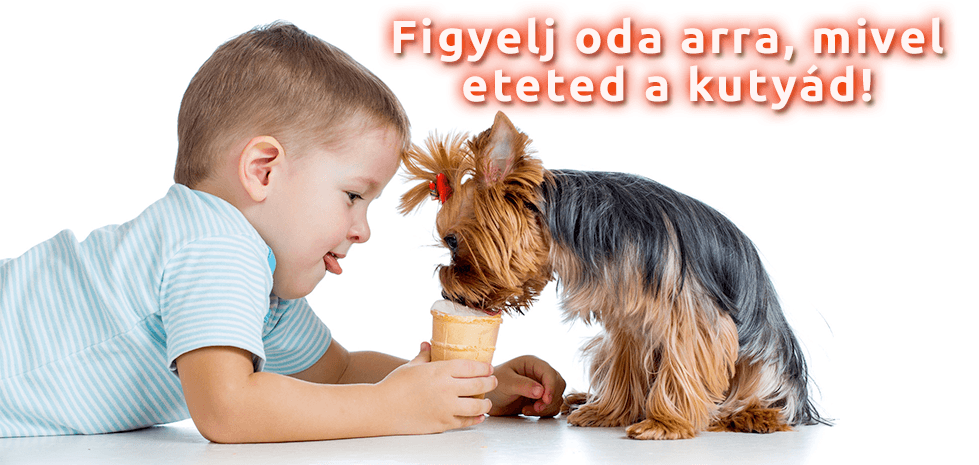
Most dogs love foods and are especially attracted to them when they see their owner, their family, consuming some food. Naturally, they also crave it, and which dog owner could resist a pleading pair of eyes or two.
We share our food with our dogs. But is every food that we humans consume also suitable for our dogs? This is absolutely not the case. Many foods that humans like and that do not cause complaints in humans are not suitable at all for our dogs, they cannot consume them, because they can cause health problems, illnesses, or even poisoning in them. We will talk about these foods that are dangerous or not recommended for our dogs and the effects they have on our dogs with our expert clinical veterinarian, Dr. Péter Hauberger, in the following.
Hello Doctor!
Based on the experiences of recent years, I can say that quite a few dog-loving owners are not aware of which foods their dogs can also consume, which are healthy for them, and which foods may cause various health problems and symptoms of illnesses if consumed.
We already know that a dog is basically a carnivore, but not only meat appears in its diet, they also consume many other foods besides this. Besides meat, many dog owners consider bones an important food in the dogs' diet. Is this really true? Among the foods and dishes that pose a danger, we must first mention the health problems related to feeding various BONES.
The first question that arises is whether we can give bones to our dogs? And if yes, how often should we give bones so that they do not cause health problems in our dogs? And above all, what kind of bones can our dogs get? Also, what health problems can bones cause in our dogs? Unfortunately, I have already heard horror stories from dog owners about bones stuck between teeth, swallowed incorrectly, or lodged (unfortunately, I also experienced this once, but fortunately, that story ended successfully – editor). I think this topic is very important exactly because of this!
Significant diseases in dogs can be linked to improper feeding. Unfortunately, the misconception must be dispelled that a dog somehow knows what is good for it. A healthy, non-picky dog eats what is put in front of it. The dog eats what it receives from us, the dog owner, or what it can get to, so we have an important role in avoiding nutritional diseases in dogs.
Dogs are carnivorous animals, as shown by the type of their teeth. They live in packs, so gorging and "competitive eating" are typical for them. Therefore, they will not chew their food as thoroughly as we humans or herbivorous animals do. This is a problem, for example, when eating bones. Because they snap a bone one or two times or swallow it whole without chewing. The large and sharp bone pieces, bone splinters formed this way can cause injuries and blockages throughout the digestive tract. Therefore, it is not recommended to give dogs tubular bones. Tubular bones mainly mean poultry wings and legs.
Other bones, such as the tailbone, neck, or pork vertebrae, often get stuck in the throat or esophagus. Bones stuck in the throat can cause choking, and their removal can only be done under anesthesia. Bones stuck in the esophagus can only be resolved by surgery. Since this operation involves opening the chest, it is a very serious surgery and serious infections can develop as complications.
Smaller bone fragments can get stuck between the teeth or burrow under the gums, into the mucous membrane, causing severe wounds and infections.
Feeding large amounts of bones and cartilage can cause severe constipation that can only be resolved with anesthesia, especially in older dogs.
However, in certain cases, we can give bones to dogs. Occasionally giving larger bones, such as a pork femur or a beef shank bone, may not cause a problem. If the dog only gnaws the bone, swallowing smaller pieces from it, then its teeth can also be cleaned, and it can also be an enjoyable pastime for the dog.
Secondly, the question of feeding raw foods arises. Is feeding RAW MEAT recommended in the diet for dogs? What diseases can be caused by consuming raw chicken, pork, or beef?
Similarly to why people do not consume raw foods, besides the less efficient nutrient absorption, it is to avoid the risk of infection. Viruses, bacteria, and worms can enter the animals' bodies through raw foods, causing serious health problems. In addition to mild stomach and intestinal inflammation, more severe diseases causing neurological symptoms can also develop. Our animals can become infected with Salmonella and Campylobacter bacteria species, as well as Aujeszky virus by feeding raw pork.
Even if we only occasionally give raw meat to the dog, the risk of infection still exists, and the danger of stomach upset can arise at any time. By heat treating foods (baking, cooking), pathogens present in raw meat can be destroyed, so we do not have to fear the health risks of infection.
Do many breeders feed raw eggs to dogs? Is it even allowed to give eggs raw, since salmonella can be dangerous to our dogs too?
Feeding raw eggs is also not recommended for similar reasons. Therefore, we do not recommend giving raw eggs either. If we cook or fry the egg, the pathogens are destroyed, thus we do not take any health risks.
The next large topic concerns MILK and DAIRY PRODUCTS, as although dogs like and willingly consume milk and dairy products, can these cause complaints in them? I know that cheeses must also be handled carefully, on one hand because they are fatty and burden the dogs’ stomachs, and on the other hand, green moldy cheeses should not be given to dogs at all because they can poison them.
The question most often arises from owners of dogs with diarrhea regarding the dietary feeding of such animals whether milk can be given to the dog. In cases of diarrhea, it is not recommended to introduce milk as a new nutrient. However, if our dog is healthy, milk can be given under certain conditions. Afterwards, it is necessary to watch our dog’s stool. If the dog has softer or diarrheal stool, milk drinking should be avoided further on. Similarly to humans, our dog can be lactose intolerant, although this is not true for every dog.
The same applies to other dairy products, such as yogurt, cheese, and curd. Supplementary consumption of dairy products is possible – provided there is no diarrhea afterward – but this should not be the main source of food. It is important to avoid monotonous, one-sided feeding. A varied diet based on healthy nutrients, possibly with the provision of reliable, good quality, and complete feed, is healthy.
It is important to note that in cases of suspected poisoning, milk should not be given. Milk has no “detoxifying” effect, and unfortunately, feeding or giving anything to drink only promotes the absorption of toxic substances. In case of suspected poisoning, veterinary care is necessary as soon as possible; do not give the dog anything to drink.
Feeding fatty and spicy foods can also cause health problems in our dogs. What problems can these cause? Are problems caused by such improper feeding common? Which fatty foods should be avoided when feeding our dogs?
Especially small breeds kept indoors tend to have more sensitive stomachs to spicy and fatty foods. During family meals, it is hard for families to resist the dog’s pleading look, so sometimes a small tasty morsel ends up being given to the dog.
However, feeding fatty, spicy foods can result in gastritis and stomach strain, which may manifest as vomiting, diarrhea, and lethargy.
Similar symptoms can develop if the dog's diet or usual feed is suddenly changed or if the dog eats a larger amount than usual at once.
Another important topic to discuss is the question of various health problems arising from CHANGING DOG FOOD. During my nearly 20 years of breeding experience, I have also noticed that when switching from one type of dog food to another, digestive and intestinal problems frequently occur in dogs, mostly diarrhea. What could be the cause of these symptoms? What should we do so that unpleasant health problems do not occur in our dogs when changing their food?
The safest option is if the dog eats a good quality, complete feed and gets used to it; occasionally, we may supplement it with one or two additional items. However, if the diet is changed suddenly after being accustomed to a certain diet, the balance of the intestinal flora may be disturbed, resulting in illnesses accompanied by vomiting and diarrhea. This is especially true for small breed dogs kept indoors and puppies.
If we want to switch our dog to a new feed, it is recommended to do so gradually, possibly with probiotic supplementation. Gradually mix the new feed with the old one, increasing the amount day by day. This allows the gastrointestinal flora time to adapt.
Another problem associated with feeding various dog foods can appear in puppies during the transition to a different feed, also manifesting as the aforementioned digestive issues along with diarrhea, often to a degree that requires veterinary assistance; otherwise, the puppy’s health would not recover. We would like to ask Doctor for some good advice on this!
In puppies that go to a new owner, diarrhea is more likely to develop. The new environment, the new owner, and the absence of the mother dog and siblings can cause a stressful state, which increases the likelihood of this problem. Therefore, it is recommended to feed them with the feed they were used to at the previous place, and intestinal flora disruption may be prevented with probiotics. The transition from the accustomed feed to the new one should be gradual, increasing the proportion of the new feed day by day.
THE CONSUMPTION OF THE FOLLOWING FOODS, FRUITS, AND DRINKS IS NOT RECOMMENDED FOR OUR DOGS, as they may cause various unpleasant symptoms and health problems:
ONION (all types), POTATO, PEA, BEAN, WALNUT, CHERRY, SOUR CHERRY, PLUM, PEACH, COFFEE, TEA, CHOCOLATE, CHOCOLATE-CONTAINING CAKES, SUGAR, SUGAR-CONTAINING CAKES, COCOA, GRAPES, RAISINS.
Finally, one more important thing: never give moldy food to our dogs! Just as we humans do not eat moldy food, we must not give it to our dogs. On one hand, they can get sick from it, and on the other hand, it has carcinogenic effects. Moldy foods are toxic to both humans and animals!
Many thanks to Doctor Hauberger for his expert assistance; the information about dangerous foods and good advice described here will surely be useful to many dog-loving families and owners!
In the next part of our series, we will also deal with the nutrition of our dogs, but regarding healthy foods, where Dr. Péter Hauberger, expert clinician veterinarian at Nyíregyháza Teaching Animal Hospital, will be our helper.
Please share this post with your friends and other dog lovers as it may also be useful to them! Thank you!
.
More useful and valuable articles for dog lovers can be found on the author’s official website.
Find Ildikó Vámosi’s official website, dog article writer and author:
Http://ildikovamosi.hu/
🙂 Thank you if you honor me with your visit! 🙂