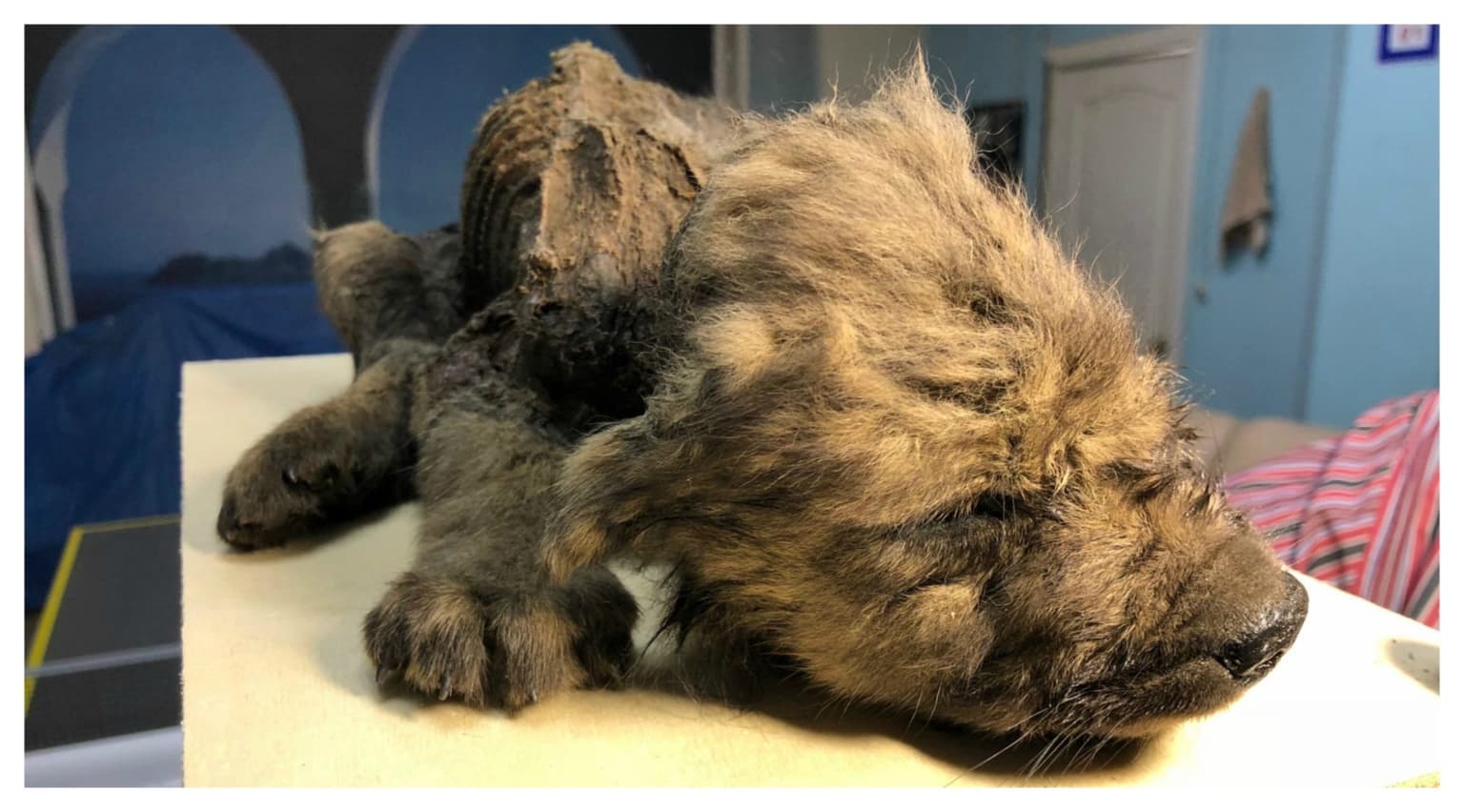
Megjelenésében éles tejfogak, bársonyosan puha orr, a szőrzet egészében bolyhos, és az egész kutyaszerű lény igazán aranyos. A neve: Dogor. A kora 18 000 évre tehető. Ez nagyon pontos meghatározás. De hogyan derült ki mindez?
18 000 éves kutyafélét találtak az örök fagy birodalmában
2018 nyarán erdei vadászok egy kutyaszerű tetemet találtak a szibériai Jakutszk várostól északkeletre fekvő Ingyigirka folyó mentén a fagyott talajban eltemetve. Az oroszországi Északkelet Szövetségi Egyetem Alkalmazott Ökológiai Intézetének kutatói a tetem DNS mintáját elküldték az Oxfordi Egyetemre, ahol a régészetben használt radiokarbonos kormeghatározással1 megállapították, hogy a kutyaféle 18 000 éves, és talán az utolsó jégkorszakban élhetett.

A kölyök a szibériai permafrosztban (örökösen fagyott talajban) annyira jól konzerválódott, hogy a pofája, a bajusza, a szempillái és szőrzetének nagy része jó állapotban megmaradt. Ha csak a fejét nézzük – a szemei csukva, az állát óvatosan az előtte lévő felületen nyugtatja, és kissé kinyújtott mancsokkal fekszik -, azt gondolhatnánk, hogy ez a kis kutyaszerű állat csak alszik.
A kutatók még nem tudták pontosan megállapítani a halál okát, viszont az kiderült, hogy a kutyaszerű lény két hónapos volt, amikor meghalt, a testhelyzetéből arra következtetnek, hogy nem volt veszélyben, és halálát nem váratlan esemény okozta.
Vajon megtalálták a legkorábban élt kutyát?
A kölyök teteme Oroszországban maradt, de a tudósok az egyik bordáját további DNS tesztek elvégzése céljából Svédországba, a stockholmi székhelyű Paleogenetikai Központba szállították. Ha sikerül meghatározniuk, hogy Dogor hol helyezkedik el a kutyafélék evolúciós családfájában, több információt felfedhet arról, hogy mikor különültek el a kutyák és a farkasok a közös őstől, és arról is, hogy mikor és miként háziasíthatták a kutyát.
Love Dalén2 és kollégája, David Stanton3, svéd kutatók úgy vélik, hogy ez lehet a legkorábbi kutya. Ha igen, akkor hihetetlenül értékes információ ez a farkasok háziasításához kapcsolódóan. „Csak a vizsgálatok elvégzése után tudtuk meg, hogy a kölyök 18 000 éves, de úgy tűnt, mintha csak a közelmúltban halt volna meg, bámulatosan jól megőrizte és konzerválta az örök fagy.”
„Elképesztő… látni, megérinteni és megtapasztalni a Föld történetét!”
A svéd Paleogenetikai Központban végzett genom analízis megerősítette, hogy Dogor fiú, de azt nem sikerült meghatározniuk, hogy a 18 000 éves tetem farkas vagy kutya volt-e.
Love Dalén, az evolúció genetika professzora szerint: „Általában már az első DNS tesztekkel megállapítható, hogy farkasról vagy kutyáról van-e szó, de ez most nem vezetett eredményre”.
Dr. Szergej Fjodorov, az oroszországi Északkelet Szövetségi Egyetem Alkalmazott Ökológiai Intézetének kutatója elmondta: „A központ Európa legnagyobb DNS-bankja, a világ minden tájáról rendelkeznek kutyafélék örökítő anyagaival, ám ebben az esetben az első DNS-vizsgálattal nem tudták beazonosítani a kölyköt. Ez érdekes. Mi van, ha kutya? Alig várjuk, hogy megkapjuk a további tesztek eredményeit.” Majd hozzáfűzte: „Elképesztő… látni, megérinteni és megtapasztalni a Föld történetét!”
„Képzeljék csak el, hogy ez a kölyöktetem 18 000 éve a föld alatt fekszik ugyanabban a pózban és állapotban, anélkül, hogy bármi is zavarta volna. Nagyon óvatosan távolítottam el a testéhez tapadt szennyeződéseket és egyéb törmelékeket, és egy csodálatos állapotú szőrzet vált láthatóvá, amely rendkívül ritka az adott időszak állatainál. Az egyetlen negatívum az, hogy a gerinc egy része védtelen, és a bordái csupaszon állnak” – kommentálta az orosz kutató.
A tudósok továbbra sem tudják, hogy a kölyök vajon kutya vagy inkább farkas lehetett
Fjodorov doktor szavait visszatükrözték a svéd kutatók gondolatai. „18 000 éves! Eddig a genomot 2x vizsgáltuk, de még mindig nem tudjuk megmondani, hogy farkasról vagy kutyáról van szó. Már nagyon sok adatunk van, és egy ilyen adatmennyiséggel számolva már meghatározható lenne, hogy farkas vagy netán kutya lehet. Az jelenti a problémát, hogy a kölyök olyan populációból származhat, amely mind a kutyák, mint a farkasok közös őse. További DNS tesztek elvégzésére van szükség” – nyilatkozta David Stanton, a stocholmi Paleogenetikai Központ genetikusa a CNN-nek.
Evolúciós átmenet a farkas és a kutya között
„A kölyök a farkas és a kutya evolúciója szempontjából egy nagyon érdekes időből származik, mivel pontosan nem tudjuk mikor háziasították a kutyát, de valószínűleg ebből az időből származhat. Azt gondolom, hogy Dogor evolúciós átmenet lehet a farkas és a kutya között” – tette hozzá Stanton, aki a csapatával együtt további genomadatok tesztelését tervezi a rejtély megoldása érdekében.
„Nem tudjuk különválasztani egy modern farkastól, a Pleisztocén (jégkorszaki) farkastól, vagy a kutyától. Az időbeni eltérés miatt nehéz meghatározni és megmondani. Tehát lehet, hogy egy nagyon korai modern farkas vagy nagyon korai kutya, vagy esetleg egy késői Pleisztocén farkas. Ha kiderül, hogy kutya, azt mondanám, hogy ez lehet a legkorábban élt kutya a földön.” – tette hozzá Love Dalén, az evolúciós genetika professzora.
Az orosz tudósok „Dogor” névre keresztelték a „kölyköt”
November 25-én a svéd Paleogenetikai Központ Twitter oldalán adta hírül a világnak: „A genom-elemzések azt mutatják, hogy fiú. Arra kértük orosz kollégáinkat, hogy nevezzék el… Így lett a kölyök neve Dogor. A Dogor egy yakut szó a barát kifejezésére, amely igazán megfelelőnek tűnik és utal a kutya vagy farkas kérdésre is.”
A háziasítás idejének megállapításához további adatok szükségesek
Nem meggyőzőek a háziasításról eddig felállított elméletek sem, hogy az pontosan mikor és hogyan történt. A Nature Communications tudományos folyóiratban megjelent 2017. évi tanulmány szerint a modern kutyákat 20 000 és 40 000 évvel ezelőtt egyetlen farkas populációból háziasították, de ez a mostani, új minta pontosabb időtartományt határozhat meg.
Ezzel szemben egy, az Oxfordi Egyetem által a Science amerikai folyóiratban közzétett 2016. évi tanulmány azt feltételezi, hogy a kutyákat egymástól függetlenül kétszer háziasították a szürke farkasból, egyszer Ázsiában és egyszer Európában, az időintervallumot előrébb helyezve, a paleolit korszakban. Tehát a kérdést, miszerint pontosan mikor háziasították a kutyát, nem könnyű megválaszolni.
A tudósok újabb DNS elemzést végeznek Dogor bordájából, melytől azt remélik, hogy többet megtudhatnak a kölyök eredetéről, és talán közelebb viszi őket a háziasítás pontosabb elméletének felállításához is!
„Úgy gondoljuk, hogy valamikor 15 000 és 40 000 évvel ezelőtt a két faj különvált egymástól. A németországi 15 000 éves kutyakövületből tudjuk, hogy a faj ebben az időszakban már létezett, de a 40 000 évvel ezelőtti paleolit (őskőkori) kövületek továbbra is vita tárgyát képezik” – mondta David Stanton professzor.
„Úgy tűnik, hogy a kutyát a kihalt ősfarkasokból háziasították, ezért olyan nehéz probléma megérteni és meghatározni, hol és mikor háziasították a kutyát. Ha szeretnénk megtalálni a kérdésre választ, az ősi mintákat kell tanulmányozni. ” – zárja a gondolatmenetet a svéd egyetem professzora.
Jegyzetek:
1. A szénizotópos kormeghatározás a 20. század legnagyobb felfedezései közé sorolható, és egy olyan radiometrikus kormeghatározási módszer, amely a természetben előforduló 14C izotópot használja a széntartalmú anyagok korának meghatározására kb. 60 000 évre visszamenően. A régészet területén ezt abszolút kormeghatározásnak tekintik. A módszer minden olyan anyag esetében alkalmazható, amely a légköri szénnel valaha is szoros kapcsolatban volt, majd később ez a kapcsolat megszakadt. Mivel alkalmazhatóságának időintervalluma a földtudományi és régészeti szempontból is a leggyakrabban vizsgált időszakot fedi le, így igen széles körben alkalmazott módszer. Segítségével az emberi kultúrtörténet kulcskérdései, valamint a negyedidőszak végének környezeti változásai vizsgálhatók. Ezt a technikát Willard Frank Libby, és munkatársai dolgozták ki 1949-ben a Chicagói Egyetemen. 1960-ban Libby kémiai Nobel-díjat kapott a radiokarbonos módszerért.
2. Love Dalén, a svéd Természettudományi Múzeum Bioinformatikai és Genetikai Tanszékének kutatója
3. David Stanton, a svéd Természettudományi Múzeum Bioinformatikai és Genetikai Tanszékének kutatója.
Források:
A stokcholmi Paleogenetikai Központ Twitter oldala
Kép források:
Centre of Palaoegenetics Twitter
Kérlek, oszd meg ezt a bejegyzést barátaiddal és más kutyabarátokkal is, mert számukra is hasznos lehet! Köszönjük! 🙂
.További hasznos és értékes cikkek a kutyák szerelmeseinek a szerző hivatalos honlapján tekinthetők meg.
Keresd Vámosi Ildikó kutyás cikkíró, szerző hivatalos honlapját:
Http://ildikovamosi.hu/
🙂 Köszönöm, ha megtisztelsz a látogatásoddal! 🙂