We dog owners talk to our pets every day. But do we understand when they “answer”? Dogs’ communication is mostly nonverbal and full of small, subtle signals. If we learn to read these signs, not only can our bond deepen, but we can also prevent many conflicts and behavioral problems. Let’s forget barking for a moment and pay attention to the details!
1. Myth Busting: The Tail
The most common misconception is that a wagging tail always means happiness. The reality is more nuanced.
Tail wagging actually indicates a state of arousal. The context determines whether this arousal is positive (joy) or negative (tension, uncertainty).
- The “helicopter” (circular wagging): This classic, loose, wide movement almost always signals friendly, joyful excitement.
- High-held, stiff, fast wagging: This often means tension, dominance, or warning. The dog is “wound up,” and it’s wise to approach cautiously.
- Tail tucked between the legs: This clearly signals fear, anxiety, or submission. The dog wants to become invisible.
2. “Facial Expressions”: Eyes, Ears, and Mouth
Your dog’s face is an open book if you know where to look for the signals.
- The eyes:
- Soft gaze, blinking: The dog is calm and friendly.
- Staring: This is a challenge, a warning. Never stare rigidly into the eyes of a stranger dog!
- “Whale eye”: When the dog turns its head away but still looks at you with visible whites of the eyes. This is a strong sign of stress and fear, indicating “stop what you’re doing.”
- The ears: (Of course harder to read in floppy-eared breeds)
- Forward, perked up: Interest, attention.
- Turned sideways (“airplane ears”): Uncertainty, nervousness.
- Flattened back: Fear, submission, stress.
- The mouth:
- Relaxed, slightly open mouth, panting: Calmness, happiness.
- Firmly closed mouth: Tension.
- Lip lifting (growling): Clear warning.
- Yawning (when not sleepy): Stress relief mechanism, indicating uncertainty (e.g., when being hugged during a photo shoot).
- Lip licking (when no food present): Soothing signal (pacing signal), often a sign of anxiety.
3. Body Posture: More Than a Thousand Words
The dog’s full body posture reveals the most about its current mood.
- Freezing: When the dog suddenly stiffens during movement. This is the last warning before biting or fleeing. The dog is uncertain about the situation and is making a decision. If you see this, stop the interaction immediately.
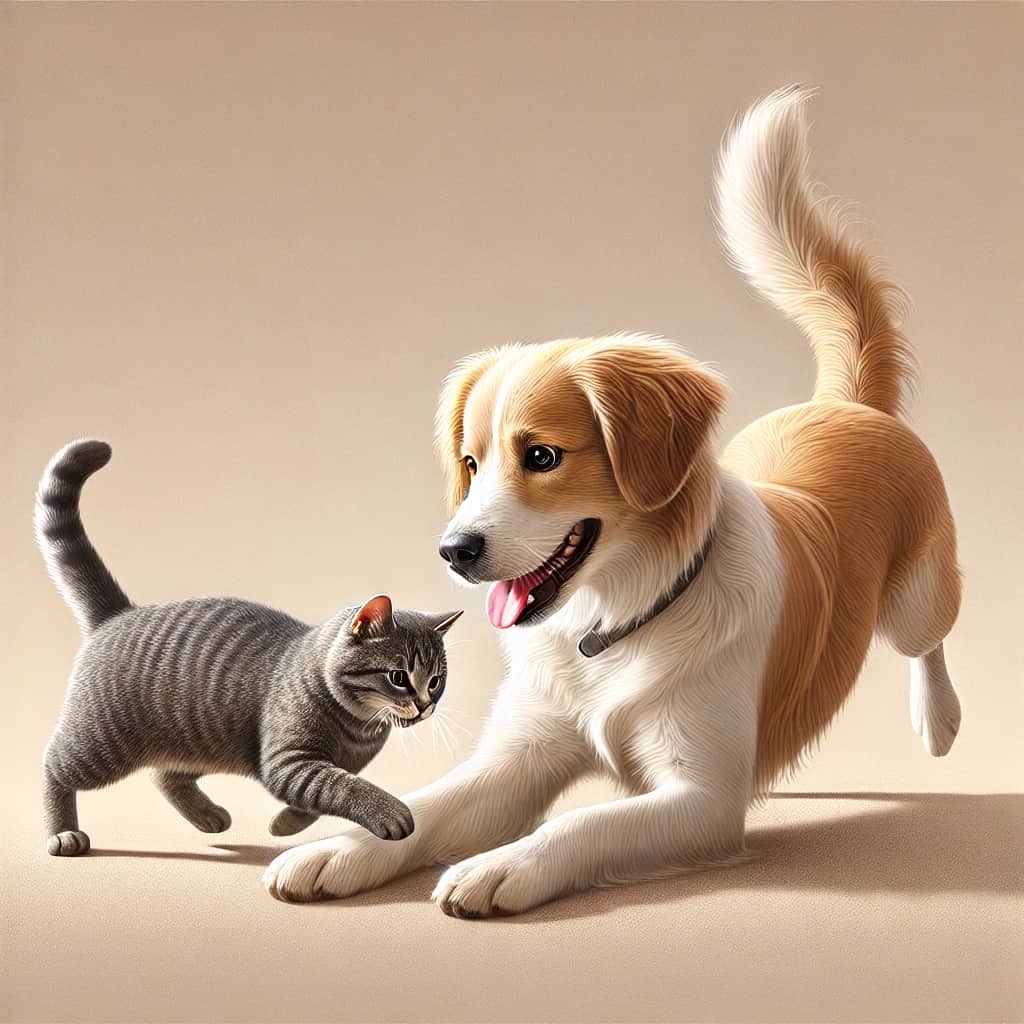
- Front legs down, rear end up (“Play bow”): This is a clear invitation to play. It signals: “Whatever I do next (growling, jumping), it’s just play!”
- Hunched posture, head held low: Fear, submission.
- Raising a front paw: Uncertainty, request (“Please don’t do that,” or “I’m waiting for something”).
- Piloerection: Raised hair along the spine (especially at the withers and base of the tail) signals arousal and stress, not necessarily aggression. The dog wants to appear “bigger.”
Context is Key
The golden rule of reading dog communication: never rely on a single signal!
A quickly wagging tail alone means nothing. But a fast wagging tail + stiff posture + “whale eye” + closed mouth = a very tense dog that should be left alone immediately.
Watch your dog in different situations: what does it do when happy? What does it do when scared by a loud noise? The better you know your dog’s “vocabulary,” the more harmonious your relationship will be.