Dogs cannot speak, but they never remain silent. Their body, ears, tail, and voice constantly send messages – you just have to learn to read these signals.
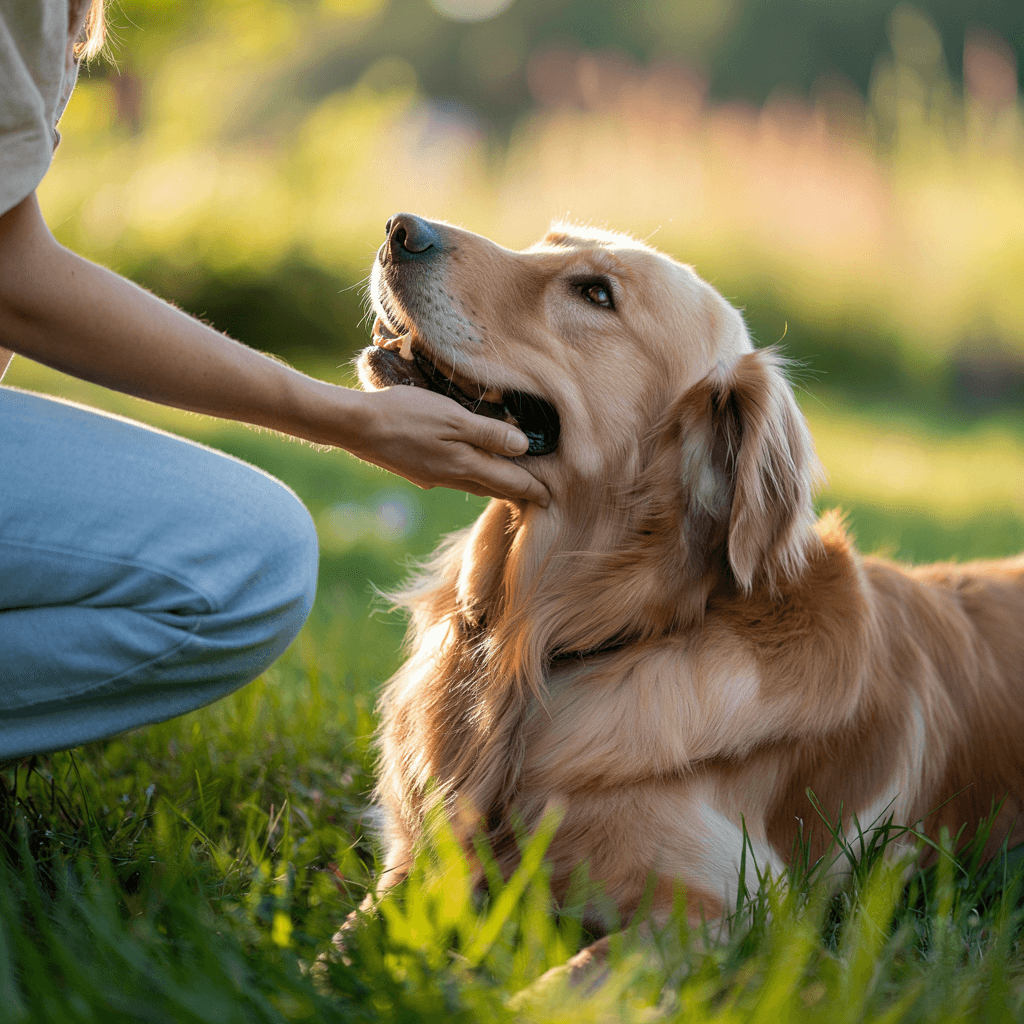
Many owners feel as if their dog is a mind reader: it knows exactly when you are sad, when you need comfort, and when you arrive home five minutes earlier than usual. This is neither coincidence nor magic. Dogs have developed over millennia the ability to observe and interpret human behavior and emotional states. In return, we can also learn their language.
The tail – the most well-known yet misunderstood signal
TAIL WAGGING
Not all wagging indicates joy
The position of the tail and the direction of its movement reveal a lot. A loosely wagging tail in a wide arc signifies genuine joy and friendliness. However, a tail held stiffly upward, trembling with small movements, can express tension or dominance – this is not the same as a happy greeting. A tail pulled down and tucked between the legs signals fear or anxiety.
Research has also shown that the direction of tail wagging matters: a stronger wagging to the right side indicates positive feelings (e.g., seeing the owner), while leaning toward the left side can signal anxiety or a negative reaction.
Body language – the whole body communicates
Dogs’ communication is holistic: rarely is it enough to watch a single body part's signals; the entire posture must be interpreted.
Leaning forward posture – a sign of confident approach or interest. If the paws also stretch forward (play invitation pose), it clearly invites play.
Retreating posture – a sign of fear or discomfort. The dog tries to occupy less space in this stance.
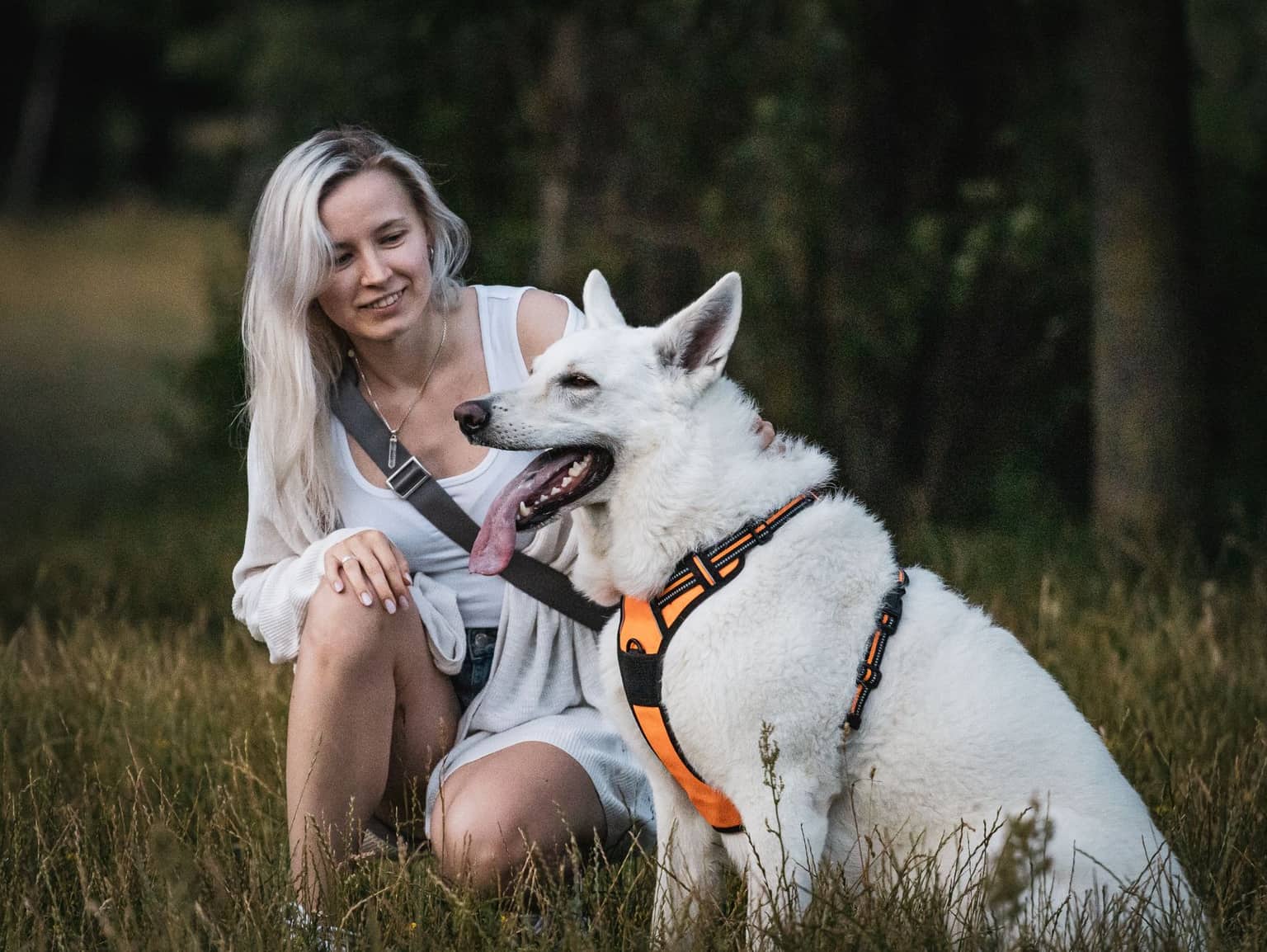
Lying on the belly with the back exposed – complete trust and relaxation. The belly is the dog's most vulnerable spot – showing it means: “I trust you completely.”
Freezing – can be a sign of attention, tension, or potential aggression. In such cases, it's advisable to reduce pressure.
“90% of dog communication is non-verbal – they pay much more attention to body language than humans do.”
The eyes – window to the dog’s soul
EYE CONTACT
Gently narrowing eyes vs. rigid, wide-open stare
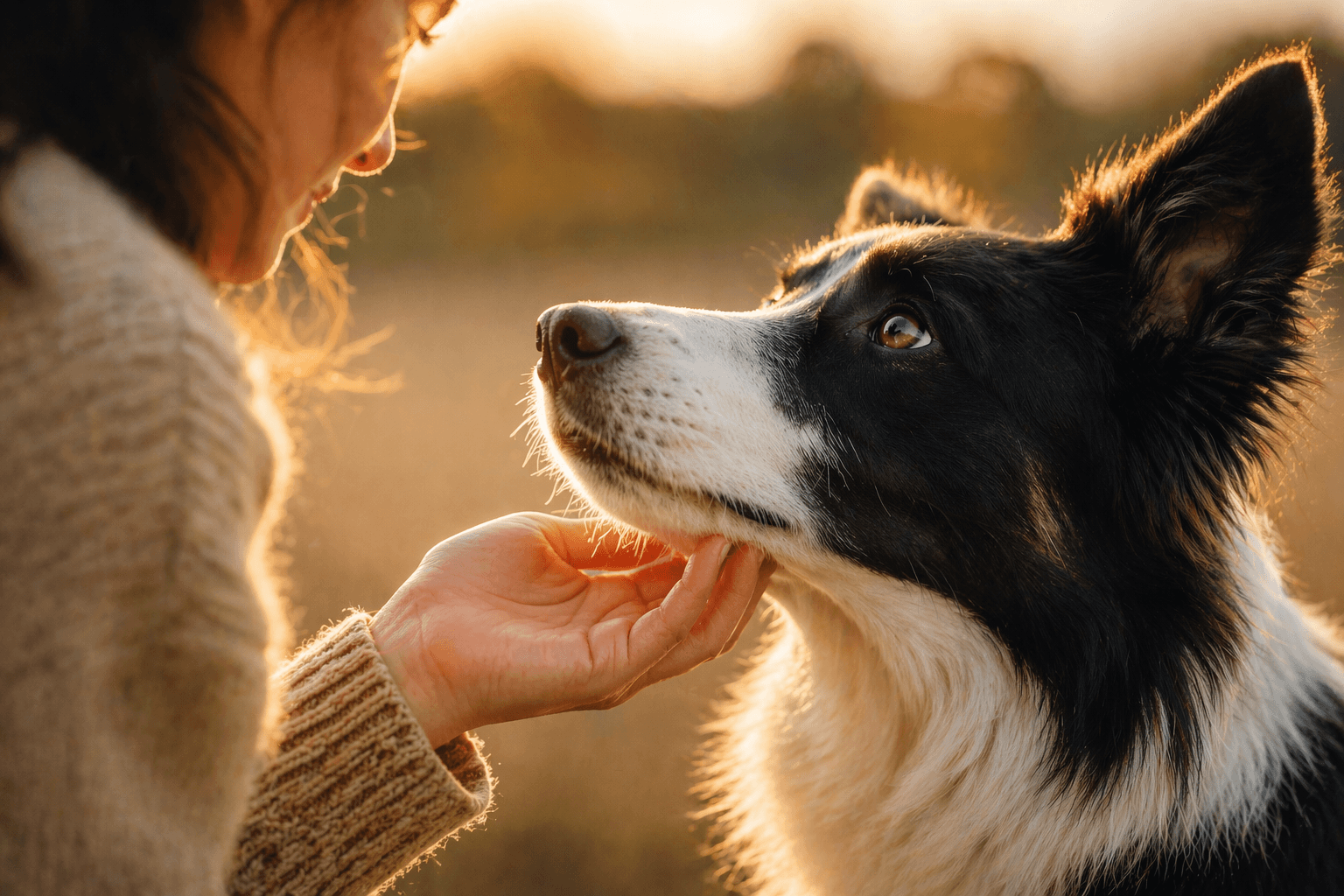
If your dog slowly blinks at you or turns its head away while looking, it is a sign of love and trust. Softly squinting eyes express calmness. In contrast, a rigid, motionless stare – especially toward strangers – can be a warning sign: the dog feels tense for some reason.
The so-called “whale eye” – when the white part of the eye is visible at the corner as the dog turns its head but keeps its eyes almost on you – typically indicates anxiety or discomfort. If you see this, give your dog space and calm.
The ears – radar of emotions
EAR POSITION
Forward, backward or sideways – each conveys a different message
Ears pointed forward and upright indicate interest and attention. Flattened, pinned back ears express anxiety, fear, or submission. Relaxed ears hanging sideways show a calm, relaxed state. It is important to note that ear morphology varies by breed, so always know the dog’s baseline to correctly interpret changes.
Sounds – more behind them than you think
VOCALIZATION
Barking, whining, growling – but why?
A higher-pitched, rapid series of barks can indicate joy or excitement. A lower, slower, more threatening bark is a warning. Whining can express pain, anxiety, or a request. Growling is a warning signal that should never be punished – the dog is communicating, and silencing it removes an important signal that can prevent a stronger reaction.
Appeasement signals – the subtle art of reconciliation
One of the most important findings in canine behavior science is the system of calming signals. These are small movements with which the dog reduces tension – in itself or its environment:
yawning – not necessarily a sign of tiredness
averted gaze
slowed movement
sudden stopping and sniffing
licking its own lips
If you see these in a stressful situation, the dog is saying: “I don’t want conflict, I want to make peace.”
How to become a better "translator"?
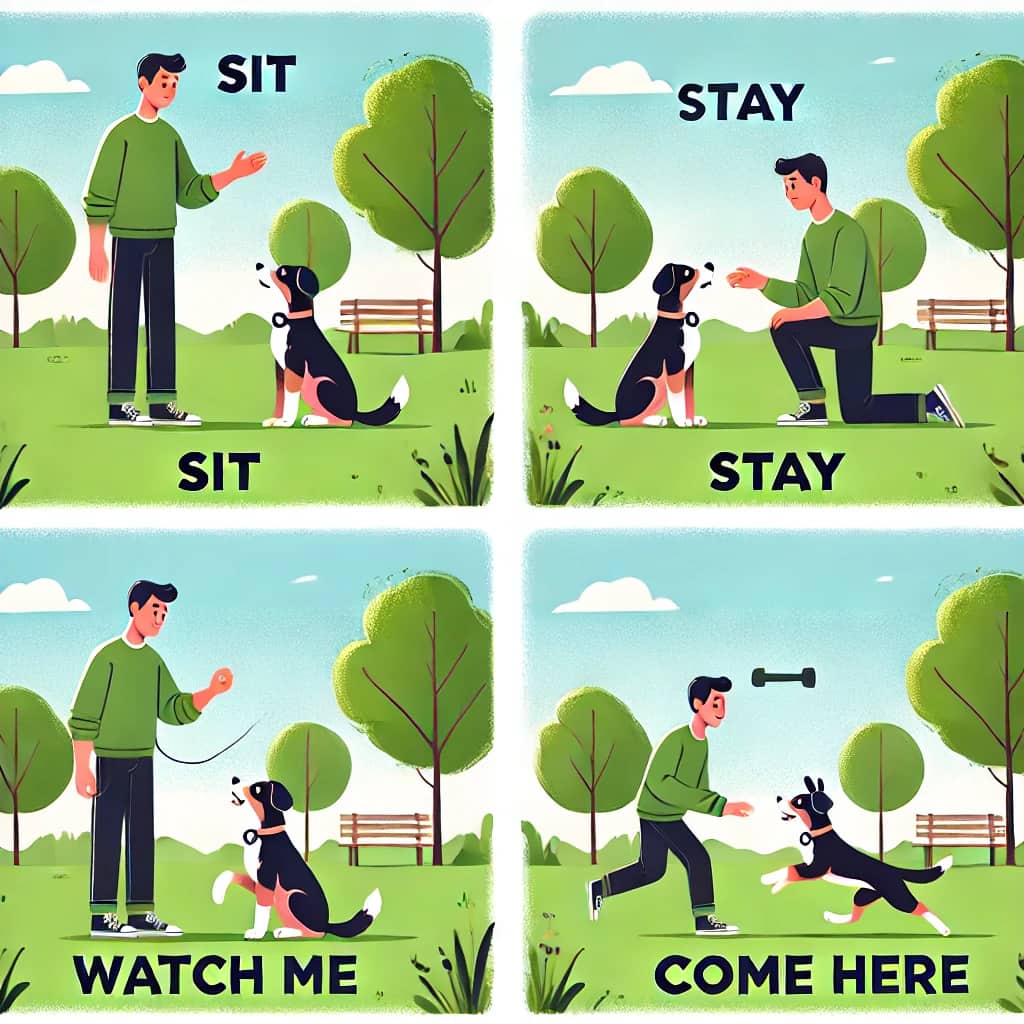
The best method is to observe your dog in everyday life – not only in critical moments. Learn what their normal baseline is: how they stand, look, and move when completely calm. This will be the foundation against which you can interpret every deviation.
Every dog is unique. Just as people have personalities, dogs also have their own specific communication habits. The more time you spend with your dog in attentive presence, the more accurately you will understand them – and they will better understand you.
If you feel that your dog's behavior has suddenly changed and you cannot interpret their signals, consult a qualified dog behavior specialist or veterinarian.