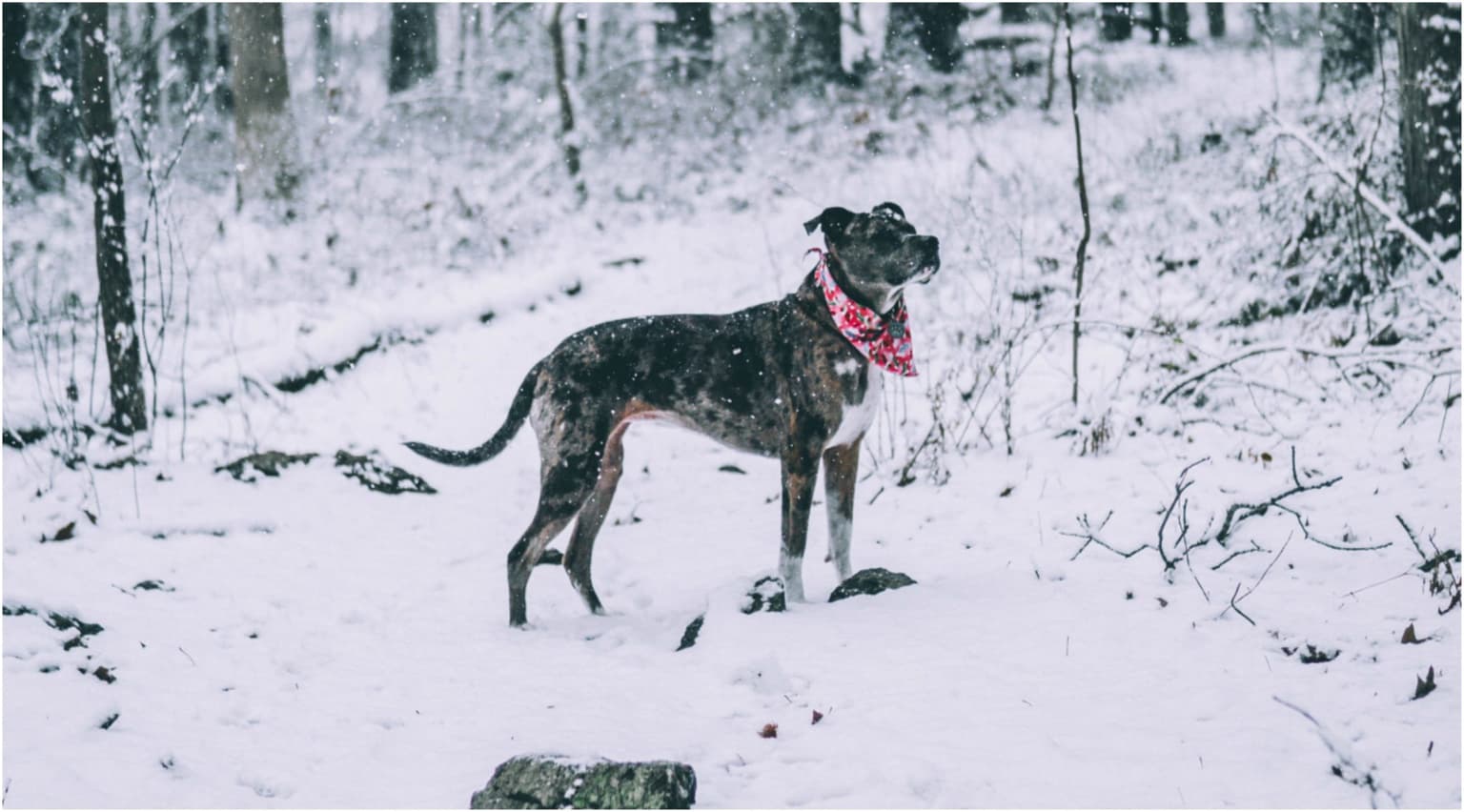
Playing together with our dog in the snow is very enjoyable and really fun, however let's not forget that the cold can also be dangerous for them. Pay proper attention and look for signs that it is too cold for them and they are freezing.
For a dog that becomes too cold, hypothermia (cooling) can develop (this happens when the dog's body temperature drops below normal levels). If the dog's body temperature continues to fall, muscles stiffen, breathing and pulse rate slow down. If help is not provided in time, the dog may die.
Frostbite is less common but can also occur. The dog's ears, tail, and paws are the most vulnerable to frostbite injuries.
There are no exact numbers expressing what qualifies as too cold weather. Harsh winter wind can create a colder feeling (surely everyone has experienced feeling colder than what the thermometer shows) and this affects both us and our dog. A cold, pouring rain with temperatures around freezing, sleet, freezing rain, or heavy snowfall can also create dangerous conditions!
Which dogs are more vulnerable?
Primarily, dogs who are not used to cold, winter weather suffer more (even if they have all the attributes to withstand it). Short-haired dogs without undercoat cannot cope well with freezing temperatures. Short-legged or toy breeds cool down more easily. Puppies, elderly dogs, and dogs with health problems also quickly feel the cold.
To make things even more complicated, some dogs simply feel the cold more than others, with less cold tolerance. For example, there are dogs like the Chihuahua who already begin to shiver at +10 degrees Celsius – which is not cold for many dogs but uncomfortably cold for them. It is important to be aware of your own dog’s cold tolerance!
Healthy dogs tolerate the cold better than those with health issues. Heart disease, kidney disease, and diabetes all disrupt the dog’s ability to maintain body heat.
Take care of your dog!
If it is cold outside, and if the wind is blowing, pay attention to your dog when you take them out even for just a few minutes – do not leave them out too long.
If you leave your dog outside for an extended time, only do so if they are healthy, and make sure to provide a well-insulated house with a roof and lined with straw (it holds heat well, while rugs or other bedding and mattresses easily get wet).
For outdoor dogs, it is important that they always have fresh water, give your dog lukewarm water more often to prevent it from freezing. High-fat foods also help in the cold, because fat is an easily metabolizable energy source.
If you go for a walk with your dog in cold, winter weather and you know they get cold easily, dress them in warm clothing. If you are on paths treated with de-icing agents, clean your dog's paws with a lukewarm wet towel after returning home. If the dog licks their paws, the salt and chemical de-icers can cause problems. If the paws remain wet after wiping, dry them with a pinch of fragrance-free baby powder.
Your dog may want to play outside, especially if there is some fresh snow on the ground. Running energetically back and forth in the snow is really fun until the snow forms a crust. The crust that forms can injure or cut your dog’s paw pads.
When the temperature drops, the most important thing you can do is watch your beloved dog and if you think it is too cold for them and they visibly shiver, bring them inside as soon as possible.
Please share this post with your friends and other dog lovers as it may be useful to them too! Thank you!
.
More useful and valuable articles for dog lovers can be found on the author's official website.
Visit the official website of dog writer and author Vámosi Ildikó:
Http://ildikovamosi.hu/
🙂 Thank you if you honor me with your visit! 🙂